1. Explain why you selected each of the FOUR videos you choose from the selection listed above.
Warhol: I like the Campbel's soup thing
Hockney..because none of the the others interested me
Uncertainty - the title sounded interesting
Henry Moore - I had to choose something
2. For each video list/discuss the key concepts you learned.
Moore beleived that the artist should not talk too often about his job because it released tension ( I assume artistic tension) I found this interesting since most folks want to talk about their jobs. I also like that he beleived that "art shows the falible, the human, variations from the perfect."
Uncertainty- Art is supposed to be an antidote to society.
Hockney- cubism was the first time pictures confused people
Warhol- did a set of several single cans as prints in addition to the one with 100 beefnoodle candles. I like the explination of the silkscreening process. We used to do this when I was a kid and I got a refressher on it.
3. How do the videos relate to the readings in the text?
I still get more out of the videos than the books
4. What is your opinion of the films? How do they add depth to understanding of the readings and art concepts?
I find the book difficult to distill anything from, the videos make it easier to understand
Sunday, November 13, 2011
Wednesday, November 9, 2011
Video response week 11
1. Explain why you selected each of the FOUR videos you choose from the selection listed above.
A Sunday on La Grande Jatte, 1884 = I like the painting
Dance at the Moulin de la Galette - I like Renoir
Expressionism - It seemed interesting
Matisse and Picasso- It seemed interesting,
2. For each video list/discuss the key concepts you learned.
Expressionism- I think the most surprising thing I found out was that Munch's work originally inspired outrage and his show once had to be closed after a week. And the Stoy behind "The Scream"
Dance- I learned that this was a real dance and a weekly one at that, I had always thought of it as a fictious thing. I was surprised to find out that Renoir was concerned about class differences and organized charity balls.
La Grande Jatte- the controversy over what the painting "means"
Matisse and Picasso- That Picasso's friends used Matisse's painting of Matisse's daughter as a dart board, this horrified me, it hurt my heart to hear it, Even if Picasso loved it. And that they respected each other a great deal. I also liked the fact that Picasso played violin and that Matissewaited for his paitnings to reveal themselves to him. THis video was an introduction to these artists and some of there works and inspirations.
3. How do the videos relate to the readings in the text?
I think that the videos in this section aument what the book is trying to say, rather than explaining concepts they talk about specific works and people
4. What is your opinion of the films? How do they add depth to understanding of the readings and art concepts?
I liked the "Expressionism" one especially as it gave a "tour" of the paintings rather than of the galleries. The insights into Renoir as a person were great.
Art gallery visit number number 2 part 2


This is Van Gogh's 1888 "La Maison de la Crau" ( The Old Mill) 1888 it is oil on canvas, His strokes are an integral part of the paintings and he uses color line, space, form and mass , he also uses size and proportion to create perspective in his image, With both of these artists my reaction is amazement and a sense of calm being created out of the chaos we live in. I simply love visiting these paintings and consider myself lucky to have them at my local gallery.
Week 11 Art Gallery Visit Part1
Questions about the exhibit:
1. What is the title of the exhibit? "The Long Curve: 150 Years of Collecting"
2. What is the theme of the exhibition? The theme is a celebration of the 150th annivesary of the Buffalo Fine Arts Academy ( now known as Albright - Knox Art Gallery) and the works it has collected in that time.
Step 2: The Gallery
Questions about the physical space:
1. What type of lighting is used? THe lighting varies depending on the room... some apear to be brighter than others and the main room of the old gallery seems to have lots of natural lighting.
2. What colors are used on the walls? White. With the exception of the sulpture room, which has a good deal of wood trim all the walls are white. ( expect Sol Le witt's walls)
3. What materials are used in the interior artchitecture of the space? Marble, plaster board, wood.
4. How is the movement of the viewer through the gallery space? This is pretty free flowing, no definate start or stop, but the rooms do draw you from one space in to another
Step 3: The Artwork
Questions about the artwork:
1. How are the artworks organized? In rooms specially constructed for this exhibit. Different "rooms" have their works arranged differntly, depending on size of the works and the space available.
2. How are the artrworks similar? Honestly with all the artists and time periods represented here the only thing you can say they *all* have in common is that they make use of the elements or art and design, sorry.
3. How are the artworks different? There are many styles, movements and artists represented here.
4. How are the artworks framed? Some have simple frames, others have none and other have extreemly intricate.
5. How are the artworks identified and labeled? All are identified and labled with artist, title, year and medium.
6. What is the proximity of the artwork to each other? Depends on the room, in some cases it depends on the wall. Some places found just one painting in a space others had groupings of similar styles or paintings that just seemed to work together well. Most of the sculptures were in one specific room. One of the Picasso's was postioned on a wall by iteself - in such a way that the columes of the building worked as an additional "frame work' for it.

I loved this view of the picture ; but you can't really see it well, so

Discription: This is a scene of a woman getting dressed with a servant holding a mirror for her. It's sparse in that other than the two figures and the mirror there is nothing else in the picture save wall and floor. Except for the servant's dress the colors are muted.
Formal Analysis: line/shape are used to create the forms of the subjects as well as the ide of wall meeting floor. Colour is used to draw one's eyes to the servants dress and value is used to distinguish between form and backgrounds.
Bracketing: THis is a familiar scene for most people ( sans the severant). We must all get ready each day and brushing hair in front of a mirror is part of that.
Interpretation: Honestly I did not have an emotional reaction to thisbeyond "Oh WOW! That's a PICASSO!" I was thrilled to see a work this early in his career. It's really hot what most folks expect from him, as most are more familiar with his cubism paintings.
This post is getting rather long. I am going to continue in another post.
Sunday, November 6, 2011
Week 10 Video Blog Review
1. Explain why you selected each of the FOUR videos you choose from the selection listed above.
Buddhism- I am a practicing Buddhist and love seeing things about it
Hinduism- It seemed interesting
Chinese Art- Again it seemed interesting
The Great Wave- It's a print I am familiar with
2. For each video list/discuss the key concepts you learned.
Buddism -I learned about the symbolism used to represent Buddha, in Sanchi, India, soon after his death. I liked seeing the different shrines.
Hinduism - I learned about the aarti ceremony- which in itself is very beautiful and art-ful. I also learned that for Hindus temples are a lesson in letting.
Chinese Art- THat black glazed tea bowls sprang from the desire for the lightest possible color for tea. And I loved the curio cabinet. This was like a curator lead tour of the museum.
THe Great Wave - I learned about the artist's life and that there were several blocks created to this piece, each color was a seperate block and that this piece would not have been created if his grandson had not been a bad gambler. Another point was the differing views of what exactly is going on.
3. How do the videos relate to the readings in the text?
They work well with them, in that they illustrate in more depth than the book can go into .
4. What is your opinion of the films? How do they add depth to understanding of the readings and art concepts? The films cover in a few minutes what would take many pages to cover in print. Honestly they do a better job of illustrating what we need to know.
Saturday, November 5, 2011
The Claustrophobic's attempt at a life mask
I started with a few exploratory drawings

and decided that I really wanted to do a life mask -still do- but I am severely claustrophobic, so I played with a few options. All of them really not good for someone like me, who does not do well with things closed on her face.
So I tried a wet paper bag and tried to let it dry enough to keep it's shape. I did not last long enough for that. And then I tried material and glue, still no go.
So I tried the net and found there's stuff called Alginate that dries in 10 minutes, I could not locate it in Buffalo and called a friend who works for Jacob's Ladder and she had never heard of it, Crimies! Foiled again!
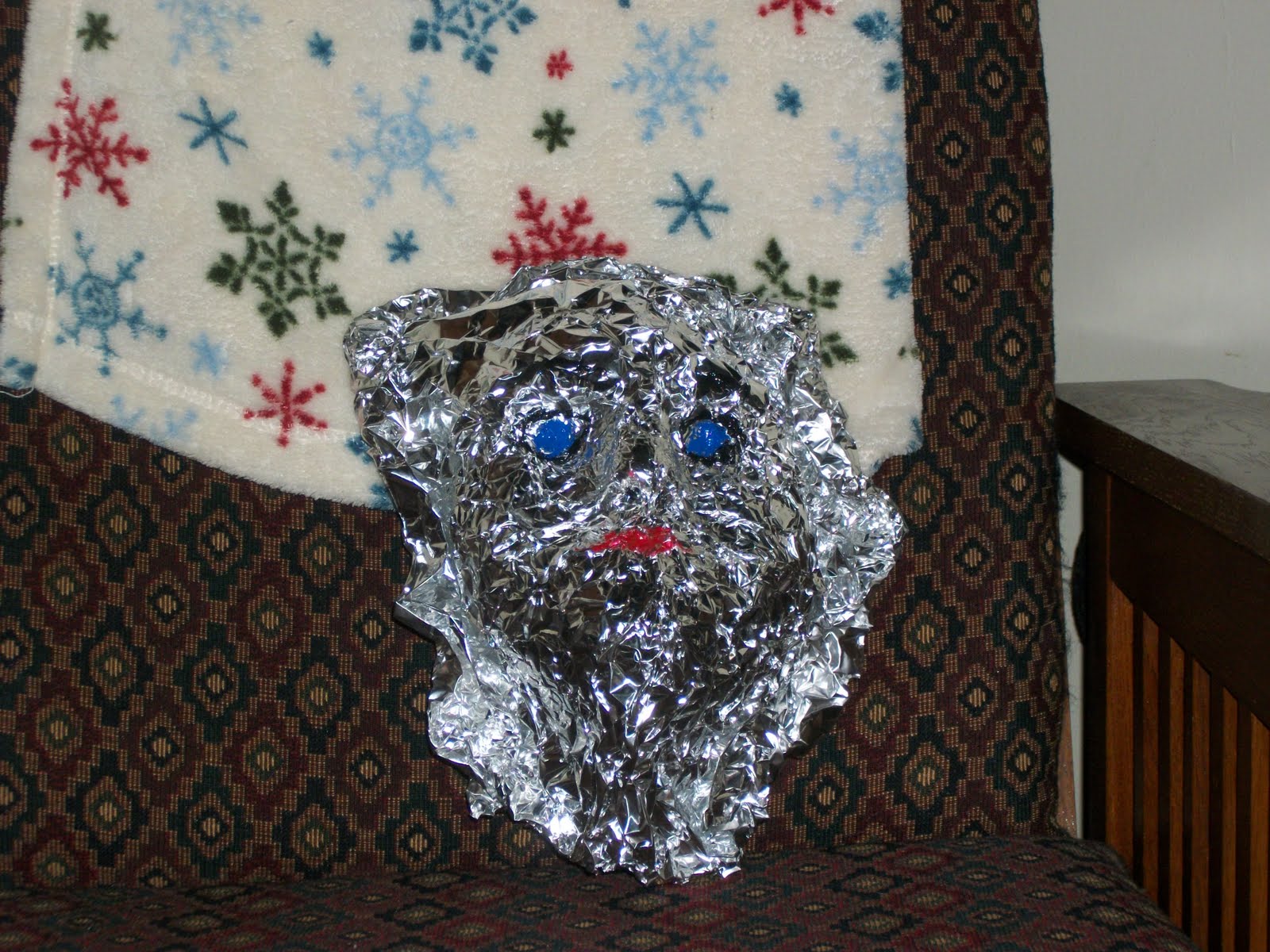
So my best friend and I played with a few ideas that she, I and her sister tossed around and the one that worked best for me was tinfoil. "T" and I shaped it around my face and pulled it off and I tried painting it. ( I don't paint well) So here it is, My Claustrophobic's attempt at a life mask.


Inspirations for my mask
In my typical way I really wanted to this up right and ever since I photographed a large part of the education collection for the Science Museum this summer I wanted to make one of these.

I seriously considered it for this project but I don't carve well.
I also seriously considered doing a life mask- but I would prefer to have it just plain plaster of paris, not like this one with make up

another I played with was similar to this

I really like the one above and would likely use it for halloween next year.
We shall see what I come up with shan't we?

Subscribe to:
Posts (Atom)